
We seek to understand the fundamental mechanisms underlying complex unsteady flows and to develop predictive theoretical, computational, and reduced-order models. Current research spans turbulence and coherent structures, aeroacoustics, instability and transition, unsteady aerodynamics and flow–structure interaction, cavitation and multiphase flows, numerical methods, and data-driven approaches motivated by challenges in aerospace and biomedicine.
We strive to create a research environment in which every member of the group is treated with respect, supported in their growth, and able to bring their full selves to the work we do together. 
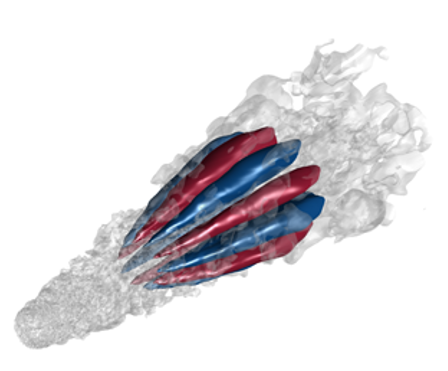
Turbulent flows often appear disordered, yet their dynamics are shaped by organized motions that control transport, mixing, and sound generation. We develop physically interpretable models and analysis tools to identify these coherent structures, understand how they emerge, and use them to build predictive descriptions of complex flows.
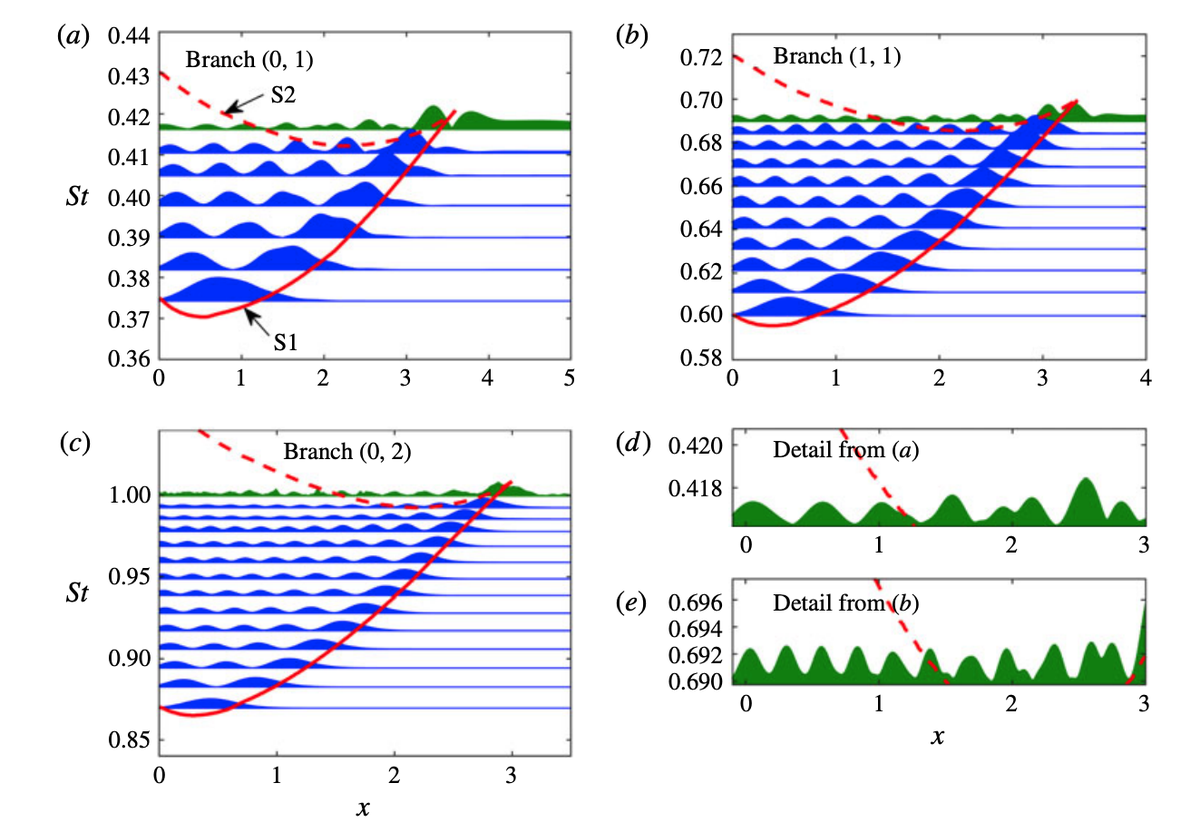
Turbulent flows generate sound through a subtle interaction of instability, coherent motion, and acoustic radiation. Motivated by the need for quieter propulsion systems, we combine simulation, theory, and reduced-order modeling to uncover the mechanisms by which turbulent jets and other flows produce noise.
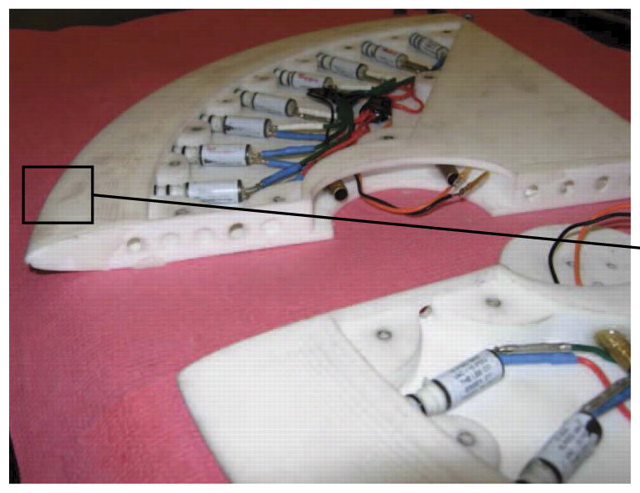
The transition from orderly motion to turbulence is shaped by the amplification, interaction, and control of disturbances. We develop models and computational methods to predict these processes in shear flows, with the goal of revealing the mechanisms that govern transition and identifying opportunities for control.

Fluid forces and structural motion are often intimately coupled, producing rich dynamics in both natural and engineered systems. We study the mechanisms governing force production, propulsion, maneuverability, and fluid-mediated interactions in unsteady flows, drawing inspiration from biological locomotion and aerospace applications.
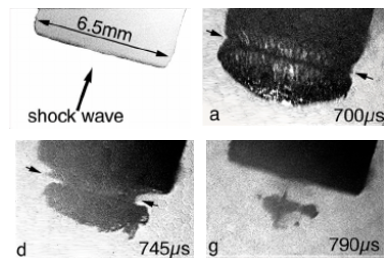
Shock waves and ultrasound can drive bubbles through violent nonlinear motions with important consequences for medicine. We study cavitation and multiphase dynamics to understand the physics underlying lithotripsy, histotripsy, drug delivery, and other emerging therapeutic applications.
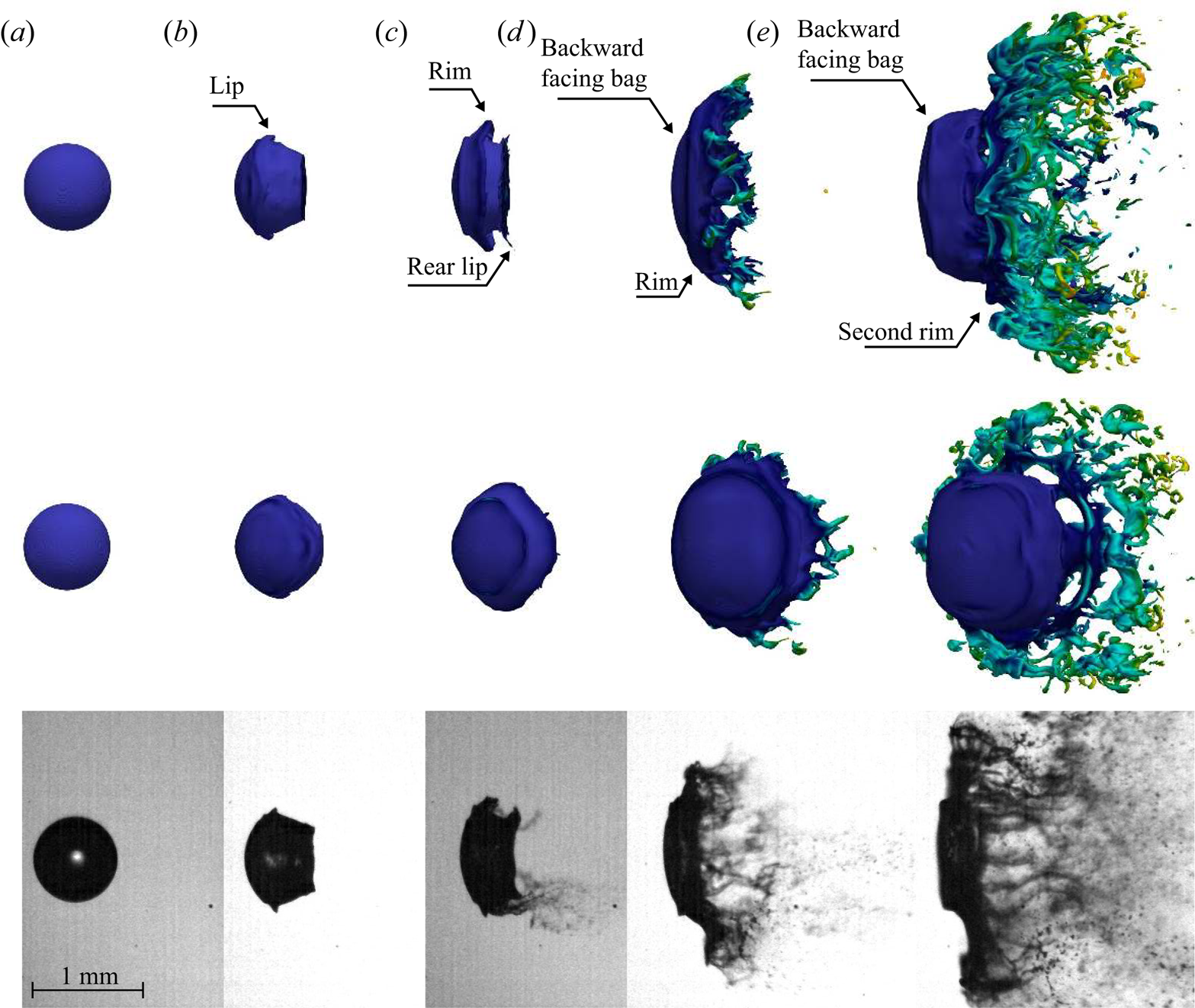
Advances in fluid mechanics often depend on advances in computation. We develop numerical methods for flows involving shocks, evolving interfaces, complex geometries, and moving boundaries, enabling predictive simulations across a broad range of scientific and engineering problems.
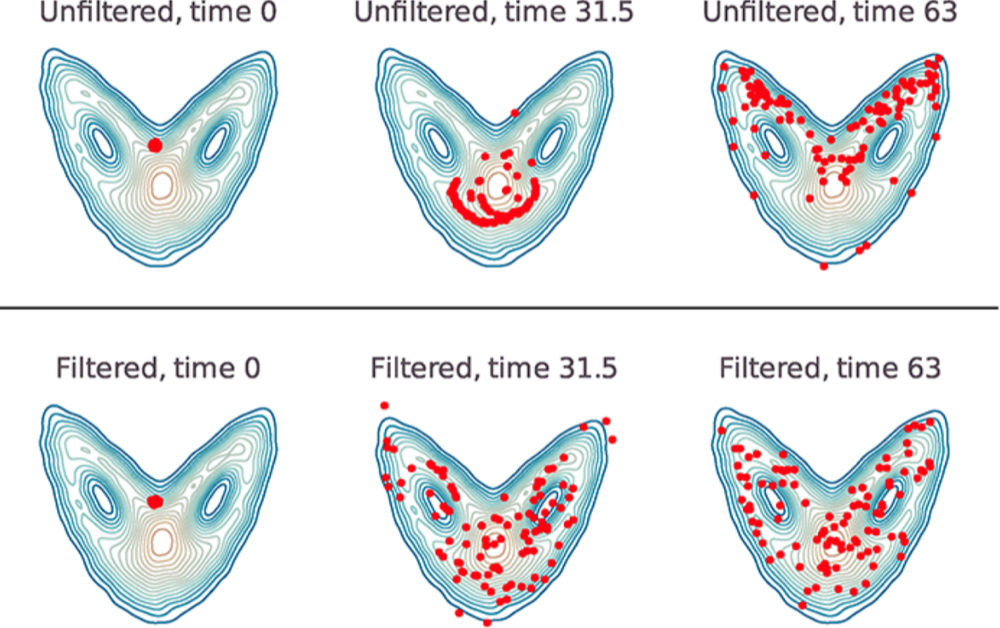
Data-driven methods create new opportunities to extract structure from complex flows, but prediction requires more than pattern recognition. We integrate machine learning, statistical inference, and data assimilation with physical principles to build interpretable models grounded in the governing dynamics.